

Conservation - Royal Coachman Lodge's Efforts
The Royal Coachman Lodge is concerned about the salmon populations around the world, and Alaska.We are fortunate to have very stable salmon runs, but they need to be protected to keep them that way. Threats from the Pebble Mine, over fishing, salmon anemia from salmon farms, and habitat destruction could all play a role in destroying one of the largest intact salmon ecosystems left in the world. Royal Coachman Lodge, and Copper River Lodge have helped raise, donated, or donated trips to keep our salmon runs healthy! Our latest concern is the Hydro project they would like put on the Nuyakuk falls just below our lodge. They are still in the process of studying the impacts, but we do not see how it will not affect the salmon runs, and also destroy one of the most beautiful areas in the Wood Tikchik State Park.
If you would like to donate to help stop this hydro project please email pat@sweetwatertravel.com to get information. Royal Coachman Lodge will match any donations. We are currently using Trout Unlimited, to help keep an eye on the studies to make sure everything is done well.
Help Protect the Nuyakuk River — Comments Needed by November 16, 2026
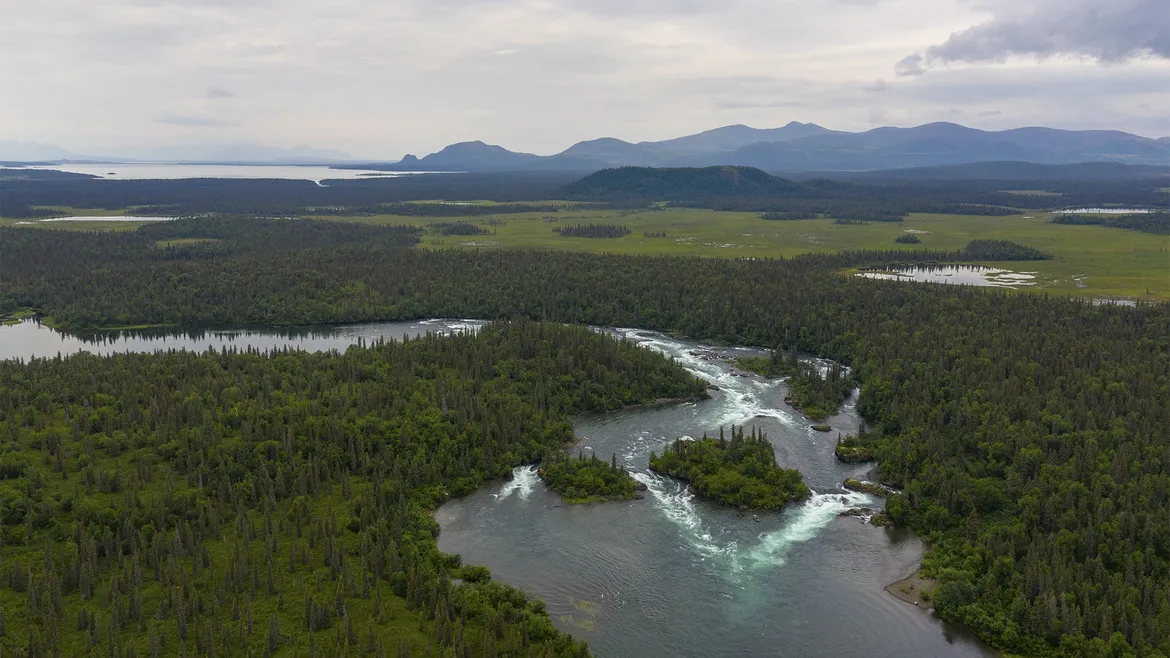
We are strongly opposed to the proposed Nuyakuk River Hydroelectric Project in Alaska's Bristol Bay region.The Nuyakuk River flows through one of the most beautiful and pristine wilderness areas in Alaska, within Wood-Tikchik State Park. This extraordinary river system supports important salmon runs, wild rainbow trout, Arctic char, and other native fish species. It is a place that deserves to remain wild and protected for future generations.
The proposed hydroelectric project would divert water from the river at Nuyakuk Falls, potentially disrupting salmon migration, harming juvenile salmon, altering fish habitat, and affecting other species that depend on this remarkable ecosystem.
One of our greatest concerns is what happens to the salmon themselves. As young salmon (smolts) migrate downstream toward the ocean, they could be drawn into the hydroelectric intake and forced through the turbines, where they risk injury or death. Equally concerning is what happens to adult salmon returning upstream to spawn. By diverting water away from the natural rapids, the project could reduce river flows to the point where migrating salmon may struggle or even be unable to navigate these critical passages. The combination of turbine-related smolt mortality and restricted upstream migration could have devastating consequences for future salmon runs.
While we recognize the need for affordable and reliable energy in rural Alaska, we do not believe it should come at the expense of one of the world's great wild fisheries. Once a river system like this is damaged, the effects could last for generations.
We encourage everyone who cares about Alaska's wild rivers, salmon, and fisheries to make their voice heard.
How to Submit Your Comments
Deadline: November 16, 2026The Federal Energy Regulatory Commission (FERC) is accepting public comments on the Draft License Application (DLA).
- Visit the FERC eComment website.
- Enter your name, email address, and mailing address.
- Check your email for a confirmation link and follow it.
- Search for project number P-14873 and select P-14873-001.
- Write a brief comment explaining why you oppose the project and your concerns about salmon, other fish species, and the surrounding wilderness.
- Submit your comment before November 16.
Please take a moment to speak up for the Nuyakuk River. Some places are simply too special to put at risk.
On this page we will try to keep you updated on current threats.
The Nushagak Electric Coopeartive is proposing a Hydroelectric Plant on the Nuyakuk River in the Tikchik National park at the Nuyakuk falls. This is Just 3 miles downstream from the Royal Coachman Lodge. We host 10 -12 anglers per week and operate 16-18 weeks of each summer from June to early October. Because of close proximity to this site and all the time we spend there we feel we know this area more than anyone and we have great concerns if this project was to go through. We are working to stop this project and we want your support to help us stop this.
Here is a video of what may be changed forever if the Hydro plant goes through.
Video link https://www.dropbox.com/sh/1n3nuuplqk8rqje/AABMho7crDeKuNvL3KDIMH1ra?dl=0&preview=Falls+-+Final+-+Vimeo.mp4
You can get more information from the FERC (Federal Energy Regulatory Commission) You can follow this link and see public comments.
Go to : https://www.ferc.gov/docs-filing/elibrary.asp
·-Go to Elibrary
·-Hit advance search
·-Type in the Docket number: P-14873
·-Click the Hydro box
·-Then Search.
Following are issues that we believe should be studied or addressed prior to allowing the Nuyakuk hydro project to continue:
- The effect of the hydro turbines on not only on sockeye, king and coho salmon smolt but also on pink salmon alevin and fry. Thousands of pink salmon spawn above the Nuyakuk falls and in the Tikchik river on even numbered years. As you may know, the pink salmon do not stay in the system until reaching the smolt stage. They drift/swim downstream shortly after hatching and may be more sensitive to turbines than the larger smolt sized fish.
- We also believe that 2 years of studies relating to salmon runs moving through the falls and smolt/Alvin downstream migration is not sufficient to fully understand the fish movement through the affected area. The salmon in this system have 2 to 5-year life cycles. Varying water conditions also affect how the fish move through this area and the study should be conducted over at least a 5-year period to fully understand their movements.
- Study the effect of resident fish moving upstream and downstream through the falls. We know that rainbow trout, grayling and even lake trout move up and down through the falls throughout the year.
- Study the oxygenation provided by the falls and its benefit to the fish in the system. With water temps rising, changing the oxygenation levels of the river could cause damage to the fishery and the ability of the anadromous fish to proceed upstream on their spawning runs.
- Study the effect of lower water flows through the falls on the birdlife that relies on the high turbidity to feed heavily on the smolt migration through the site. With the experience we have in the area, it’s obvious to us that the smolt migrate through the falls not only in springtime but throughout all the summer months.
- We’d like to see a full archaeological study along the portage trail. We’ve heard of people discovering items believed to be remains of spear heads along the trail. Digging this area up could destroy a lot of evidence pertaining to the history of the people who have used this site for thousands of years.
- Park user impacts should be investigated. Our guides and guests hike through the proposed construction area to fish below the falls nearly every day June through September. This project would adversely affect their experience (visually, fishing quality, remoteness, etc.). Therefore, we believe it would definitely have a negative impact on our business. Maybe a visitor questionnaire could be created that the local lodge guests could fill out after their stay?
- Study the effect of the noise that will be generated during the construction of this project and how it will impact park visitors and wildlife.
- Determine the minimum CFS needed to operate the turbine(s). SB 91 was worded to allow up to 30% flow to be diverted around the falls. With winter flows always going down to 3000 CFS and sometimes as low as 1000 CFS, it’s safe to say this power plant may not operate year-round.
Because there is no turning back once the powerplant is installed, we believe a full EIS (environmental impact statement) is in order for this site. We believe this project will have a cumulative effect on the salmon runs and other local wildlife. An EA (environmental assessment) is much less suited to determining the full impact this project will have on the park and its resources.
·We asked the Nushagak Cooperative engineer this question: “If after the fact you do find that you have an impact on the salmon fisheries or salmon runs, would this project get shut down?
The answer was: “No”
Royal Coachman Lodge also sponsors two students every year at the Bristol Bay Guide Academy. This is a guide school to teach local youth how to get in the sport fishing business. It is essential that the sport fishing industry supports the local communities, and this is a great way to start the process.
Please support the agencies that are fighting this mine and helping us with this hydro project: Trout Unlimited, the Conservation Fund, the Nature Conservancy, and the Sportsman's Alliance.
Recent News:
For the most up to date information on the Pebble Mine please go to:Savebristolbay.org
Bristol Bay needs every sportsman and woman that has fished, or wants to fish, Bristol Bay to make a donation this summer! Bristol Bay’s fish, wildlife, and people are depending on us to support them.
If you want to make a donation please click on this link, every donation helps!
https://gifts.tumembership.org/donate/sbb-sportsmens-challenge
If you want to learn more on why this is the wrong mine in the wrong place please click here….
www.savebristolbay.org
Thank you for your support!
Recent News 2019: